Start with the launch, not a quantity ladder
A new shop may need packaging before it can forecast repeat demand. That creates two separate risks: committing too much money to unused stock, and choosing a short run whose setup and delivery make every usable pack expensive. Begin with the product variants you will actually launch, their packed dimensions and the number of orders you can realistically support.
Do not assume that several colors share one production setup. A different size, printed panel, foil tool or insert can create another version to approve and quote. Ask the supplier how quantities are allocated between versions before dividing an order across many designs. A focused first range can be easier to validate than a broad collection with uncertain demand.
Compare three practical routes
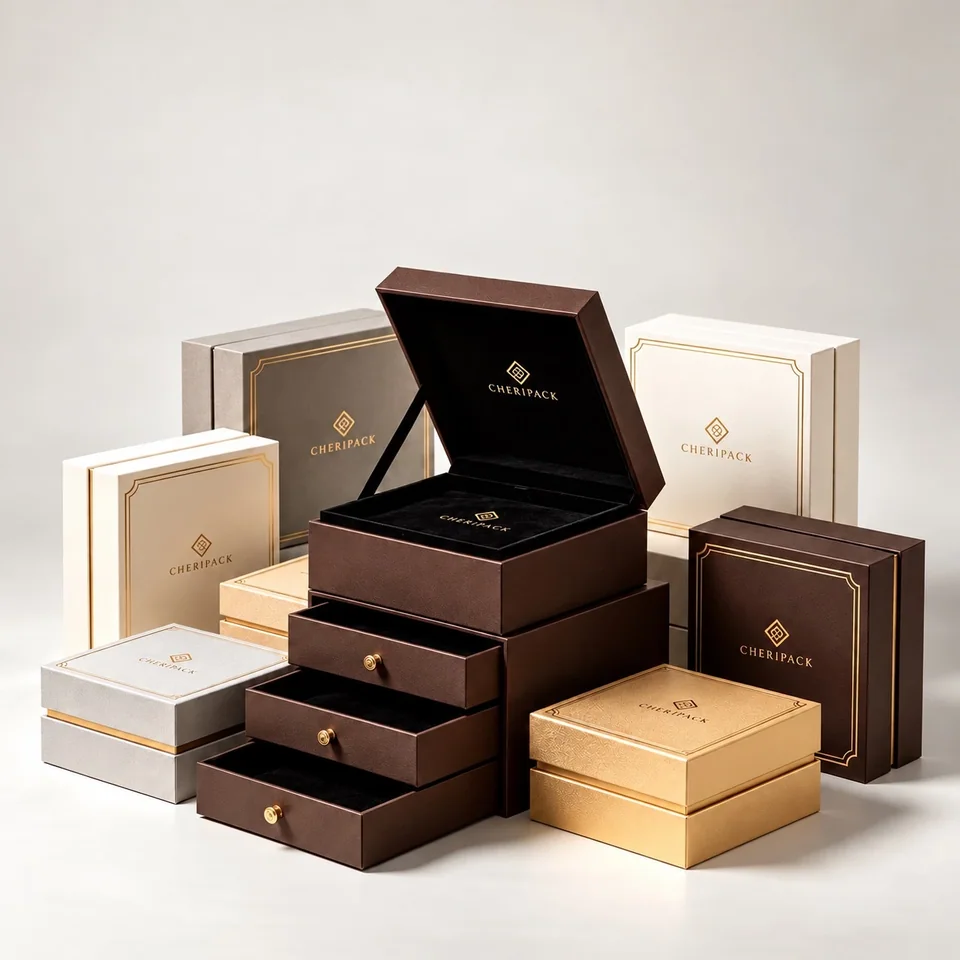
Stock packaging with a separate label or card can be appropriate when the product fits an existing format and the brand artwork is still changing. Fully printed custom packaging becomes more useful when the fit, closure or visual presentation is central to the product. A shared custom structure with a changeable printed insert can sit between those routes.
Compare the same packing job, not just the outside appearance. Include any tissue, inner holder, label, bag and protective outer carton needed to finish one customer order. A cheap empty shell is not necessarily a cheap complete pack. Ask who applies labels and assembles the packaging, because shop-floor time is part of the operating decision.
Build a cost per usable pack
Use a planning total of packaging production, setup and tooling, samples, included accessories, packing and delivery. Divide that total by the number of usable packs expected from the order. Keep tax, import and delivery scope explicit rather than assuming a factory quote covers every destination charge.
Unused packaging belongs in the decision too. If a large run depends on an untested product, a changing logo or a seasonal message, not every unit may be usable later. Conversely, an established size and evergreen artwork can make repeat-order comparisons more meaningful. This is a planning method, not a promised saving or a standard price.
Ask for comparable written scenarios
Send one specification and request clearly labeled quantity scenarios. Keep the material, dimensions, closure, insert and finish constant. Ask which charges are one-time, whether tools can be reused, and which changes would require a new setup. Do not compare a plain carton quotation with a foil-branded rigid presentation as if quantity were the only difference.
At CheriPack, the starting MOQ is 100 pcs; list the proposed quantity for each size and artwork so the order scope can be reviewed. Sample preparation is 5–7 days after specification review, and production is 10–15 days after approvals. Freight and sample courier are additional stages. Confirm the delivery plan before promising your own launch date.
Compare the decisions
| Route | Useful when | Cost or workflow to check |
|---|---|---|
| Stock pack + branding | Dimensions are standard and artwork is changing. | Labels, application time, fit and protective packing. |
| One custom design | A defined structure and brand presentation matter. | Setup, sample, unit price and delivery. |
| Shared structure, several versions | Related products fit one validated format. | Artwork allocation and separate insert or print setups. |
Your next-step checklist
- Packed dimensions and weight for each launch product.
- Quantity by size, color, artwork and insert version.
- The same bill of materials for every comparison quote.
- Separate setup, sample, assembly and delivery scope.
- A physical approval record before the bulk run.